

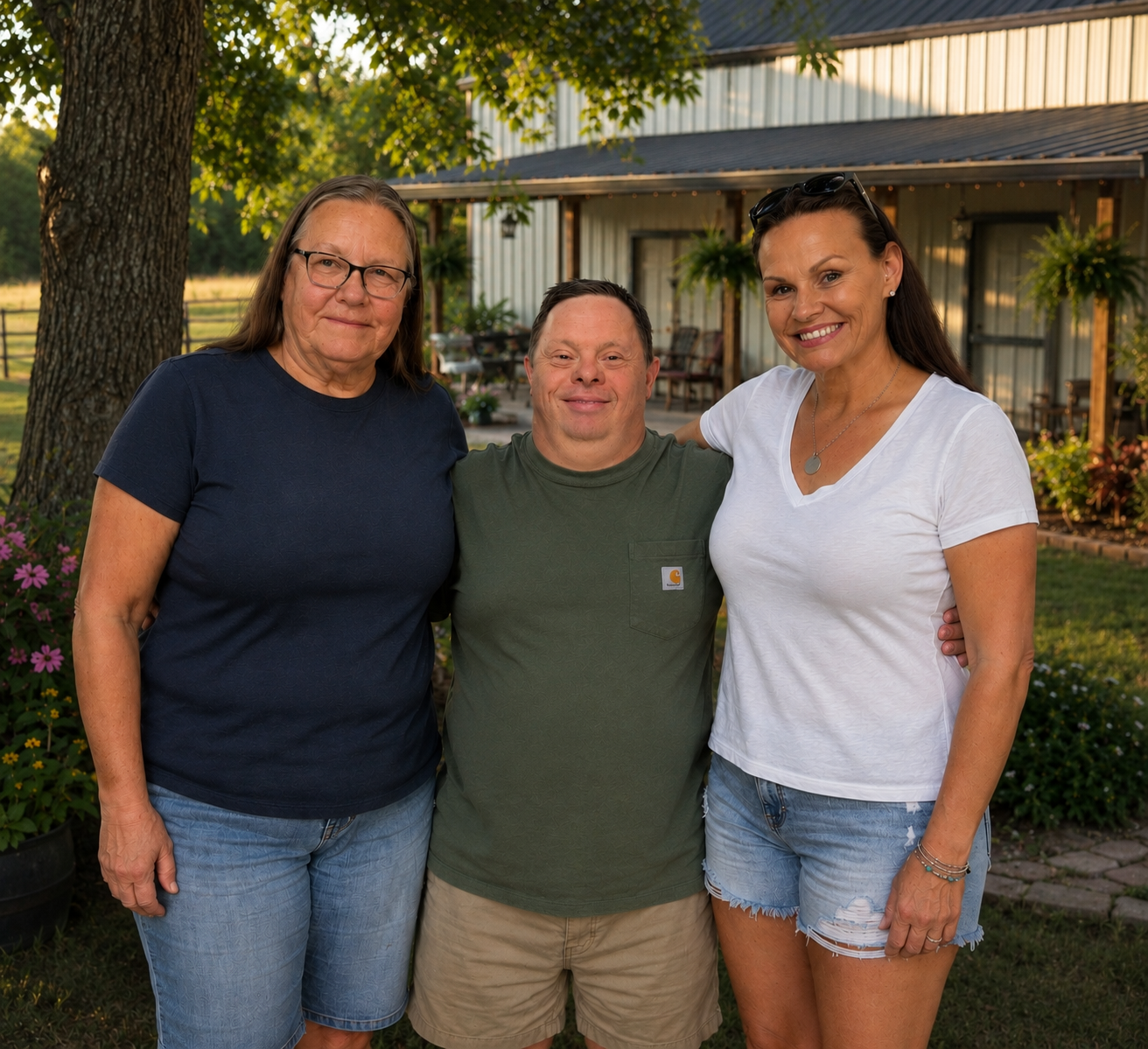
After the death of a loved one, the Bass family was horrified to find that they had no route to pursue justice in what they believed was blatant malpractice.
Gerald Bass had just turned 50 when he became ill and was hospitalized in Sebring, where his family lived at the time. He was born and raised in Okeechobee and was deeply loved by friends and family. Devastated by the death of Gerald, his family said the tragedy was made even more heartbreaking by the lack of proper medical care and the shocking disregard shown toward him. Gerald’s sister Kristin Pfennig said she and her mother, Susan Bass, overheard multiple medical professionals involved in his care say things like, “He has Down’s Syndrome — he probably already outlived his life expectancy.” Kristin said they made it seem as if his life did not matter because he had a disability.
After Gerald’s death, the family made the difficult choice to pursue justice through the legal system. “We did not want money,” said Kristin. “We wanted to protect others from this type of incompetence.” However, after they reached out to several attorneys, only to be refused for no apparent reason, the family finally heard from one lawyer, who explained why they were being turned away. This man told them Florida has what is known as the “Free Kill” Law [Florida Statute §768.21(8)]. He explained that in the state of Florida, if an unmarried person, 25 years old or older and with no minor children, dies due to medical malpractice, their surviving adult children or parents cannot sue for non-economic damages, such as pain and suffering. He said that this means health care providers face no financial liability for pain and suffering if the victim fits this category. “Because Gerald had Down syndrome and no spouse or children, our family was effectively denied access to the courts,” said Kristin.
Kristin and Susan have been researching this cruel law since they first learned of it. They found that it was passed in 1990. It was created as an amendment to Florida’s Wrongful Death Act with the goal of preventing adult children, 26 years and older, and the parents of adult children from suing for pain and suffering if their family member dies due to medical malpractice, if that family member is not married or has no minor children at the time of his death. They explained the reason for the law was to entice more medical professionals to practice in Florida. The law was intended to keep medical malpractice insurance premiums from skyrocketing.
In May of 2025, the law was nearly repealed when both the House and the Senate agreed to end it. However, Governor Ron DeSantis vetoed this effort, and the law is still on the books. DeSantis allegedly vetoed the legislation because he believed it could result in skyrocketing malpractice insurance rates, which could run doctors out of the state. He added that it could result in higher costs for healthcare and reduced access to care, especially for seniors and those in rural communities. He said he would not consider changing the law unless it included strict limits on non-economic damages, which would prevent frivolous lawsuits and predatory trial attorneys.
Florida is the only state to have a law like this on the books, and yet, the other states still manage to have medical care. “The only thing the 'Free Kill' law has done for Florida is to attract medical professionals who are substandard,” said Kristin. “They do not have to fear being sued for pain and suffering when a patient dies due to medical negligence.”
Prior to his veto, the governor was scheduled to meet with family members whose loved ones were killed in Florida hospitals. However, with no explanation, he was a no-show to this meeting and instead spent his time with medical lobbyists, hospital administrators, insurance administrators, etc. instead.
Kristin said you can’t assume you are safe just because you do not live in Florida. This can also happen to visitors to the state who meet these criteria.
Sandy and Kristin are fighting for justice for Gerald, and this begins with a repeal of this law, which they describe as absolutely appalling.
“Florida has attracted these doctors who are less than stellar for the last 30+ years,” said Sandy. “We are now a state filled with third-rate physicians.”
“This was nothing to them,” said Kristin. “They did this to Gerald, then went home and went to sleep like it was no big deal.”
“Gerald’s life mattered. He was more than a diagnosis — he was a brother, a son, and a person who brought love and meaning to our lives every single day.
“We carry deep sadness and heartbreak, but we are turning that pain into focus and determination. Determination to fight for change so no other family is ever told their loved one’s life doesn’t matter in the eyes of the law. No one should be denied the right to hold those responsible accountable for negligence,” said Kristin. “In the state of Florida, just under half of us would fall into the category affected by this law.”
In January, the House passed a bill to renew efforts to repeal the law, but the Senate blocked it.
For more information, see the family’s Facebook page, Healthcare Justice Coalition


