A closer look at water management infrastructure in South Florida
By SFWMD
Posted 1/15/26
Moving water to meet varying conditions and needs is essential to sustaining South Florida's people ...
You must be a member to read this story.
Join our family of readers for as little as $10 per month and support local, unbiased journalism.
Already have an account? Log in to continue. Otherwise, follow the link below to join.
To Our Valued Readers –
Visitors to our website will be limited to five stories per month unless they opt to subscribe.
For $5, less than 17 cents a day, subscribers will receive unlimited access to SouthCentralFloridaLife.com, including exclusive content from our newsroom.
Our commitment to balanced, fair reporting and local coverage provides insight and perspective not found anywhere else.
Your financial commitment will help to preserve the kind of honest journalism produced by our reporters and editors. We trust you agree that independent journalism is an essential component of our democracy.
Get every story for $10 a month. You can cancel at anytime.
Register for an account
You'll need an account on our site to post calendar listings and comment on stories. Sign up today. It's free, and takes just a minute!
I am anchor
A closer look at water management infrastructure in South Florida
Posted
By SFWMD
The South Florida Water Management District (District) actively maintains a vast water management system.
This system connects to secondary drainage districts comprised of smaller neighborhood systems to effectively manage and safeguard South Florida’s water resources.
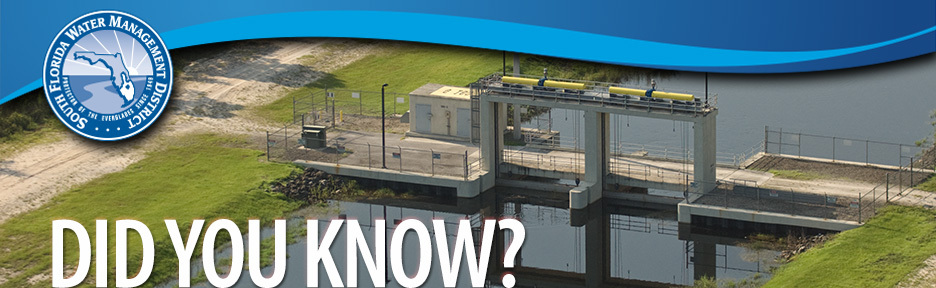
DID YOU KNOW: Moving water to meet varying conditions and needs is essential to sustaining South Florida's people, economy and our environment.
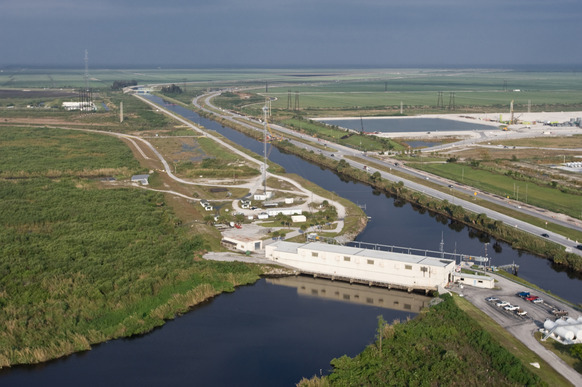
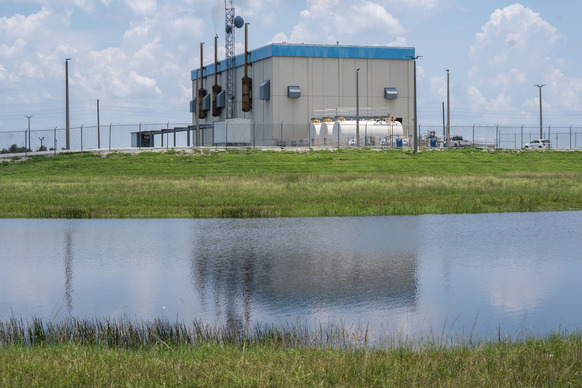
EFFECTIVELY MANAGING WATER YEAR-ROUND: The District oversees more than 2,175 miles of canals, 2,130 miles of levees/berms, 98 pump stations, 620 project culverts and 936 water control structures. Our team works every day to ensure the regional water management system operates smoothly and efficiently to provide flood control and protect regional water supplies.
A CLOSER LOOK: From canals and reservoirs to stormwater treatment areas and spillways, we’re highlighting some of the most common types of water management infrastructure. Test your knowledge and get to know these terms:
Stormwater Treatment Areas (STAs): Large, constructed wetlands designed to remove nutrient pollution from water using natural aquatic plants.
Reservoirs and Impoundments: Human-made water bodies used for water storage above or below ground. A Flow Equalization Basin (FEB) is a type of impoundment designed to temporarily capture and hold water.
Weirs: Structures across a canal or stream that maintain a more consistent water level upstream of the structure.
Pumps: Mechanical control structures that lift water from lower levels to higher levels in order to push the water.
Spillways: Structures that allow movement of water between water bodies by use of gates.
Dikes and Levees: A barrier that diverts or restrains the flow of water. The large earthworks that surround Lake Okeechobee are generally referred to as dikes, whereas the smaller earthworks surrounding canals and Water Conservation Areas are generally called levees.
Culverts: Structures that allow the flow of water between two areas underground. They are typically placed under roads or levees.
Canals: A system of human-made trenches used for the movement of water.
Ditch (dry): A narrow channel dug in the ground, typically used for drainage alongside a road or the edge of a field. Ditches are typically dry except during rain events.
LEARN MORE: The District uses cutting-edge technology to assess the status of its water management infrastructure, prioritize long-term needs, and develop adaptation strategies to help ensure the resiliency of the regional flood control and water management system – now and for future generations.
We encourage you to visit SFWMD.gov/FloodControl to learn more about the regional water management system and flood control in your community.